Transcript
BECKY QUICK: As you know, Warren Buffett has made a practice of not making calls on where he thinks the market is heading, but he does have a pretty unique view into consumer and enterprise behavior, and I asked him if the markets right now make sense to him.
WARREN BUFFETT: I think there are times when opportunities are just thrown at you so fast you can't—it's unbelievable. And then there's other times when you're very, very lucky if you find one thing in a couple of years. And it should always be that the latter is what prevails.
Interview
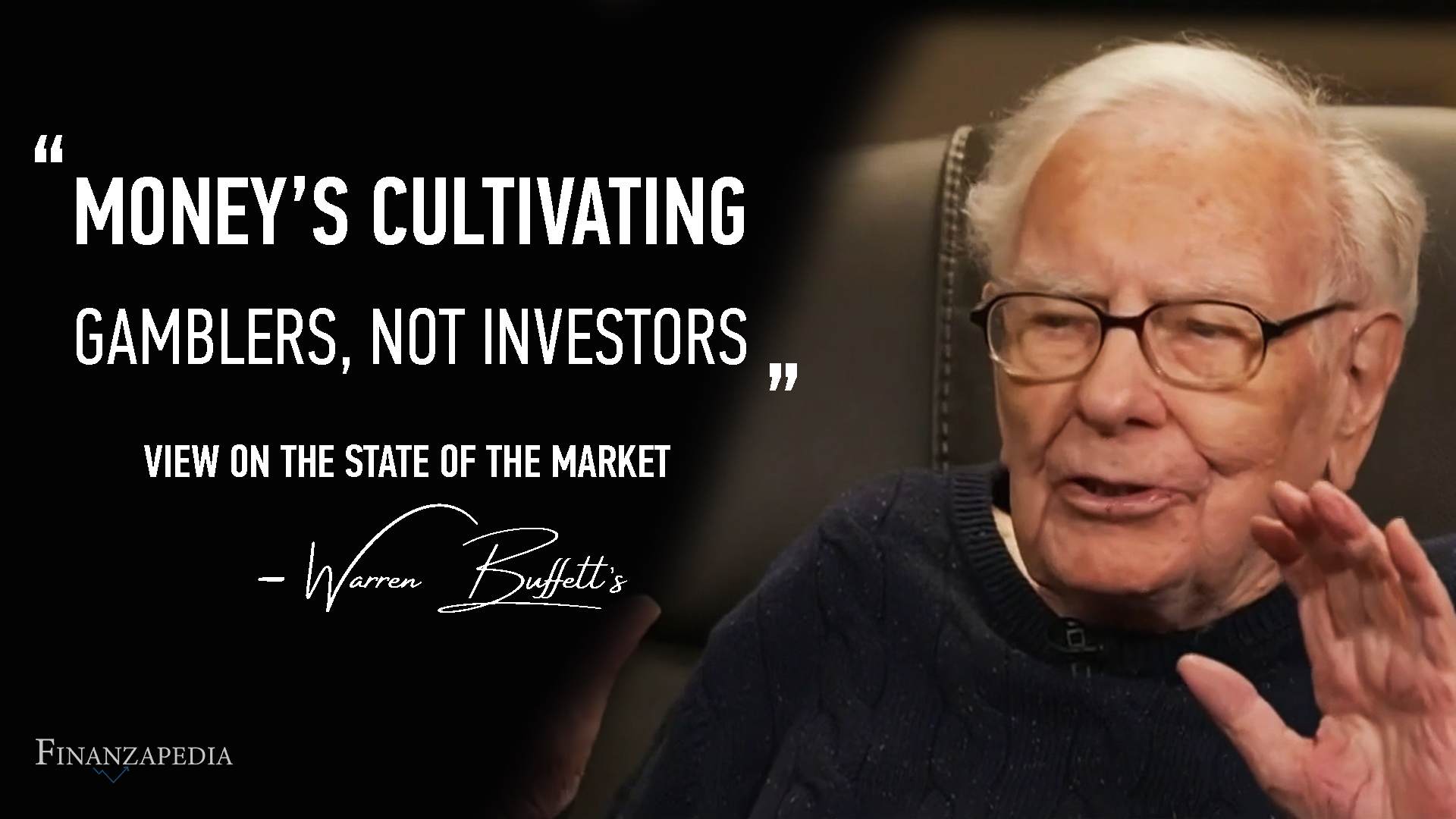
But since humans love to gamble so much, there's more money in actually cultivating gamblers than there are cultivating investors. If somebody bought Berkshire 40 years, you know, 50 years ago, a guy would have made one commission. And he should spend the rest of his time telling the client, "Don't do anything with it." And that's just not the way. We can't expect that of humans. But every now and then you do find people that, I mean, you find people that behave far better than other people.
BECKY QUICK: Fair to say, though, it's tougher to find values or find cheap opportunities.
Warren Buffett: It's tough to find values when everybody is preferring gambling. From the standpoint of the state, we may have discussed this, but from the standpoint of the state, it's sort of disgusting because the state needs money for all kinds of things—roads, schools, you name it. They have found that they can clip people who are buying nothing but hope, selling them something with a payout ratio of 60 percent or something like that. And if they weren't doing that, they'd have to have the income tax higher.
It's a cynical sort of activity. And I think the less you get cynicism between the governing body and the people in government—you don't want people to be cynical about their system. But there's times when the system says, "Just be as cynical as you want, because this is what I'm going to do, baby."
BECKY QUICK: Even though Buffett says that it's not easy to find cheap deals to do anywhere, it hasn't stopped the company from doing things. Greg Abel, the new CEO, obviously bought Taylor Morrison for $6.8 billion earlier this year, and then he turned around and did the $10 billion placement, the private placement for Google shares. And we're going to talk a lot more about those things over the course of time, but just some interesting things to see where they stand right now.
Key Takeaways
The Profitability of Gambling: Wall Street and the financial system make far more money generating constant transaction fees by "cultivating gamblers" than they do by encouraging long-term "buy-and-hold" investors.
The Scarcity of Value: True, cheap market value becomes incredibly hard to find when a speculative, high-frequency trading mentality takes over the entire financial landscape.
The State as a Profit-Seeker: Rather than intervening, the government exploits this human urge. By running lotteries or heavily taxing high-risk financial vehicles, the state builds revenues on the backs of citizens who are essentially "buying nothing but hope."
Institutional Hypocrisy: Relying on the public's desperation to avoid raising broader income taxes creates a profound, fundamental rift of cynicism between the governing body and the citizens it is supposed to protect.
Finanzapedia's Conclusion on Buffett's POV
When we listen to Warren Buffett call out the "disgusting" cynicism of the system, it is easy to view it as a detached macroeconomic critique. But on the ground, this system breeds a very specific, deeply rational desperation.
Today’s retail environment is full of traders willing to risk an entire paycheck on volatile 0DTE options. To an old-school value investor, this looks like pure financial madness. But in an era marked by historic inflation, runaway asset prices, and devalued purchasing power, standard wealth-building advice can feel like running on a treadmill. When the traditional path — working for 50 years to achieve a modest compounded return — seemingly promises little more than a retirement eroded by the cost of living, the rules of the game feel fundamentally broken.
This is precisely the loop of institutional cynicism Buffett is warning us about. The government and the wider financial machinery help create the economic conditions that make long-term planning feel impossible, and then they turn around and profit by selling the exit tickets to the casino. When citizens lose faith in the systemic fairness of their economy, gambling ceases to look like a reckless vice. Instead, it starts looking like the only logical choice left to buy a ticket to a real life.