I. Introduction: The Gold Standard of Capital Allocation
Berkshire Hathaway is not merely a company—it is a living textbook on how to build generational wealth. Under the leadership of Warren Buffett and Charlie Munger, Berkshire transformed from a failing textile mill in 1965 into a $900+ billion conglomerate that serves as the definitive case study in long-term value creation, anti-fragile portfolio construction, and the power of permanent capital.
For the student of wealth building, Berkshire represents the practical application of every principle we discuss in this encyclopedia: compound interest without interruption, buying wonderful businesses at fair prices, maintaining fortress-like liquidity, and never being forced to sell during market panics.
II. The Structure: A Holding Company on Steroids
Berkshire Hathaway operates as a diversified holding company with three distinct components:
1. Wholly-Owned Operating Businesses
Berkshire owns over 60 businesses outright, including:
Insurance Operations: GEICO, Berkshire Hathaway Reinsurance Group, General Re
Utilities & Energy: Berkshire Hathaway Energy (formerly MidAmerican Energy)
Manufacturing: Precision Castparts, Lubrizol, IMC (industrial tools)
Consumer Brands: Dairy Queen, Fruit of the Loom, See's Candies, Duracell
Transportation: BNSF Railway (one of North America's largest freight rail networks)
Real Estate & Construction: Clayton Homes, Johns Manville, Acme Brick
These businesses generate predictable cash flow that feeds the capital allocation machine.
2. Minority Equity Positions (The Stock Portfolio)
Berkshire maintains a massive public equity portfolio, holding significant stakes in:
Apple (historically Berkshire's largest position)
Bank of America
American Express
Coca-Cola (owned since 1988)
Chevron
This portfolio is managed with a long-term, concentrated approach—the opposite of Modern Portfolio Theory's diversification-for-diversification's sake.
3. Cash & Treasury Bills (The War Chest)
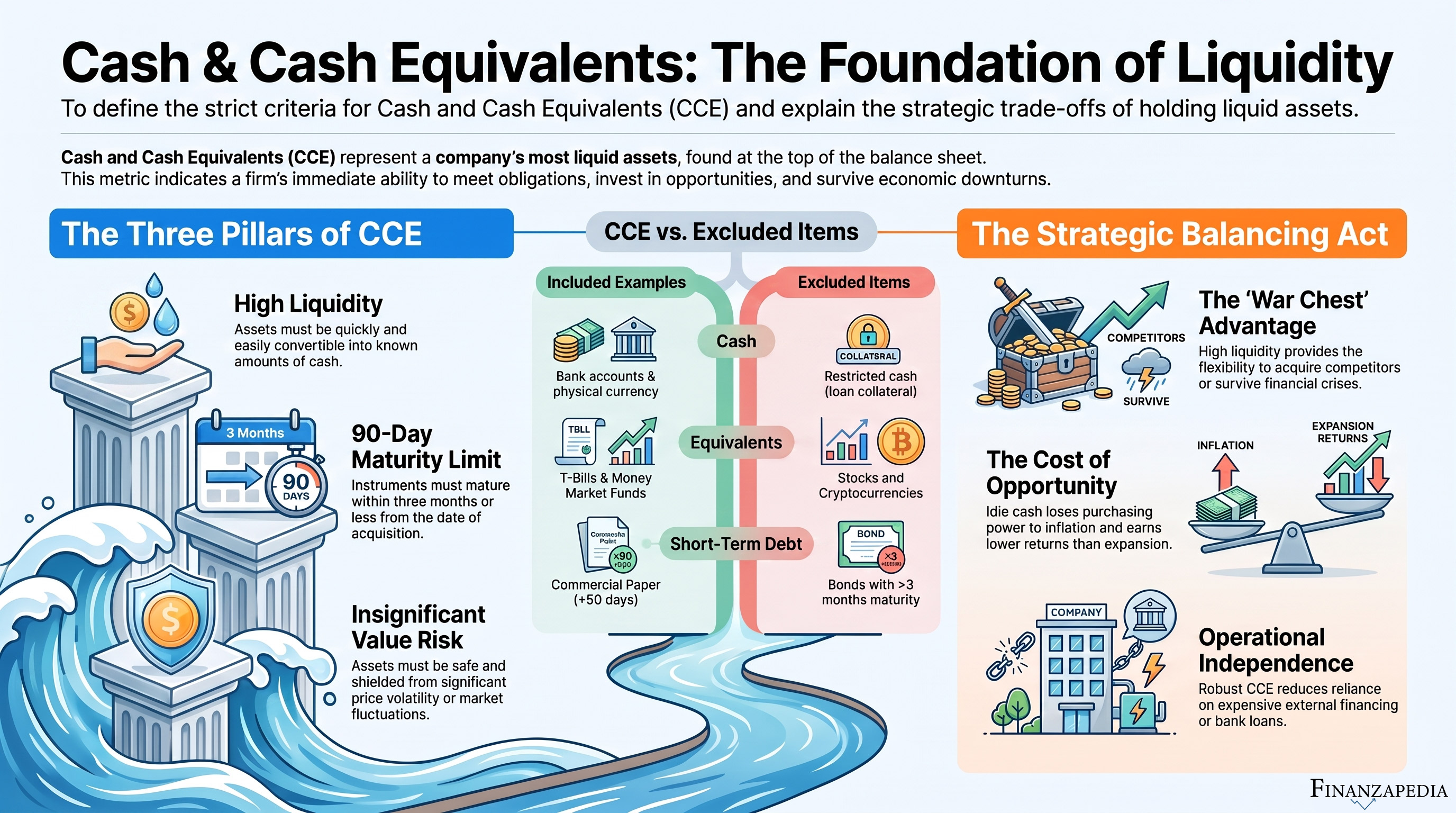
Berkshire consistently maintains $100-150+ billion in cash and short-term Treasury bills. This is not "dead money"—it is optionality incarnate. This liquidity allows Berkshire to:
Deploy capital during market crashes when assets are discounted
Never be forced to sell positions at inopportune times
Make large acquisitions without needing external financing
Sleep well at night regardless of market conditions
III. The Buffett-Munger Philosophy in Action
Berkshire's structure embodies the investment principles Warren Buffett and Charlie Munger have preached for over six decades:
1. Circle of Competence
Berkshire invests only in businesses it understands deeply. You will not find Berkshire buying speculative biotech stocks or complex financial derivatives. The portfolio consists of railroads, insurance, consumer goods, energy—businesses with durable competitive advantages and transparent economics.
2. Margin of Safety
Every acquisition and investment is made with a significant margin of safety—buying $1 of intrinsic value for $0.60 or less. This protects against estimation errors and provides downside protection.
3. Economic Moats
Berkshire targets businesses with wide economic moats: competitive advantages so strong that competitors cannot easily replicate them. Examples include:
GEICO's low-cost distribution model in insurance
BNSF's irreplaceable rail infrastructure
See's Candies' brand loyalty and pricing power
Coca-Cola's global distribution network and brand equity
4. Owner-Operators & Decentralization
Buffett and Munger allow the managers of their wholly-owned businesses to operate with near-total autonomy. Berkshire's headquarters in Omaha employs only about 25 people. This decentralized structure attracts the best owner-operators who want to run their businesses without bureaucratic interference.
5. No Dividends, No Stock Splits (Historically)
For decades, Berkshire paid no dividends, allowing all earnings to be reinvested at high rates of return. The company also avoided stock splits (until 2010 with the B-shares) to discourage short-term speculation and attract long-term, business-minded shareholders.
IV. The Anti-Fragile Fortress: Berkshire During Crises
Berkshire's true genius reveals itself during market dislocations. While other institutions scramble for liquidity and are forced to sell assets at fire-sale prices, Berkshire thrives in chaos.
The 2008 Financial Crisis
When the financial system was collapsing:
Berkshire deployed $15.5 billion into investments, including deals with Goldman Sachs, General Electric, and others
These investments came with preferential terms (high dividends, warrants) unavailable to ordinary investors
While banks were begging for government bailouts, Berkshire was the lender of last resort
The 2020 COVID Crash
While markets panicked:
Berkshire sat on over $140 billion in cash
The company was never at risk of insolvency
Buffett waited patiently, eventually deploying capital into select opportunities
The Lesson: Anti-fragility is not about predicting crashes—it's about being financially positioned to exploit them when they inevitably occur.
V. The Insurance Float: Berkshire's Secret Weapon
One of Berkshire's most misunderstood advantages is its insurance float. When insurance companies collect premiums, they hold that money until claims are paid. This creates a pool of capital (the "float") that Berkshire can invest.
The genius:
Berkshire's insurance operations are profitable (they make money on underwriting, not just investments)
The float costs less than zero (they're paid to hold other people's money)
The float has grown from $237 million in 1970 to over $160 billion today
This creates a self-reinforcing cycle: insurance profits generate float → float gets invested at high returns → returns strengthen the balance sheet → stronger balance sheet allows more aggressive underwriting → more float.
VI. Performance: The Numbers Don't Lie
From 1965 to 2023:
Berkshire's Compounded Annual Gain: ~19.8% (book value per share)
S&P 500 Compounded Annual Gain: ~10.2% (including dividends)
Overall Gain: Berkshire delivered a cumulative gain of over 4,300,000% vs. the S&P 500's ~31,000%
Translation: $10,000 invested in Berkshire in 1965 would be worth over $400 million today. The same $10,000 in the S&P 500 would be worth approximately $3 million.
This is the power of compounding without interruption over six decades.
VII. The Succession Question
As of 2024, Warren Buffett (in his 90s) has implemented a succession plan:
Greg Abel (Berkshire Hathaway Energy) is designated as Buffett's successor for operational oversight
Ted Weschler and Todd Combs manage portions of Berkshire's investment portfolio
The decentralized structure ensures the company can continue functioning regardless of leadership changes
The real question: Can Berkshire maintain its culture of discipline, patience, and anti-fragility without Buffett and Munger? Only time will tell.
VIII. What Berkshire Teaches the Individual Investor
You don't need billions to apply Berkshire's principles:
Build a Cash Reserve: Maintain 6-24 months of expenses in liquid assets. This allows you to invest during downturns rather than panic-sell.
Invest in What You Understand: Stick to your circle of competence. If you don't understand the business model, don't invest.
Focus on Quality, Not Quantity: Own 5-10 wonderful businesses rather than 50 mediocre ones.
Think in Decades, Not Days: Berkshire's greatest investments (Coca-Cola, American Express, See's Candies) have been held for 30-50+ years.
Never Use Leverage on Core Holdings: Borrowed money can force you to sell at the worst possible time. Permanent capital = permanent advantage.
IX. Criticisms & Limitations
No analysis is complete without acknowledging weaknesses:
Size is the Enemy of Performance: At nearly $1 trillion in market cap, Berkshire cannot move as quickly or generate the same percentage returns as it did when smaller.
Tech Underweight (Historically): Berkshire missed the early internet/tech boom, though Apple has since become a massive position.
Succession Risk: Can the culture survive its founders?
Conclusion: The Blueprint for Financial Invincibility
Berkshire Hathaway is not just a stock ticker—it is a financial philosophy made manifest. It proves that you can build staggering wealth without leverage, without speculation, and without compromising on quality.
The company embodies anti-fragility: a fortress balance sheet, diversified cash-generating businesses, and the discipline to wait for exceptional opportunities. For anyone building generational wealth, Berkshire is required study.
As Charlie Munger said: "We don't have to be smarter than the rest. We have to be more disciplined than the rest."
Internal Encyclopedia Links:
See: Margin of Safety: The Foundation of Value Investing
See: Economic Moats: Identifying Durable Competitive Advantages
See: Insurance Float: Understanding Low-Cost Leverage
See: Anti-Fragile Portfolio Construction
See: Compound Interest Without Interruption